













What Is Cyber Security? how it works, Types, Importance & Complete Guide 2025
In today’s hyper-connected world, cyber security has become the backbone of digital safety. From protecting personal data to defending corporate networks against cyberattacks, cyber security ensures that our online world remains safe and reliable. But what exactly is it, how does it work, and why does it matter more than ever?
Let’s dive deep into the world of cyber security — explained in simple words, with examples, tables, and diagrams for better understanding.

Here is you can explore more about AI vs Human, Who will win in content creation, you will definitely find it useful.
Understanding Cyber Security
Cyber security is the practice of protecting computer systems, networks, and digital data from unauthorized access, theft, or damage. It covers everything from personal devices (like smartphones and laptops) to large-scale corporate and government systems.
Think of cyber security like a digital lock system — it keeps intruders out and ensures that only authorized people can enter.
Why Cyber Security Matters
In a world driven by data, every click, download, and online transaction carries a risk. Cyber criminals exploit weak systems to steal sensitive data or disrupt services. Without cyber security, our personal privacy, financial stability, and even national security could be at risk.
A Real-World Example:
-
In 2023, several hospitals worldwide were hit by ransomware attacks, locking patient data and halting operations until hackers were paid.
-
Without cyber protection, lives were literally on the line.
The Main Objectives of Cyber Security
| Objective | Description |
|---|---|
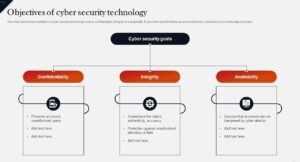
| Confidentiality | Ensuring only authorized individuals can access data. |
| Integrity | Keeping data accurate and free from unauthorized changes. |
| Availability | Making sure systems and information are always accessible to authorized users. |
These three pillars — often called the CIA Triad — form the foundation of every cyber security strategy.
What Is Cyber Security? How it works
Types of Cyber Security
Cyber security covers multiple layers of protection. Each type defends a specific area of the digital environment.
1. Network Security
Protects the infrastructure of networks — routers, firewalls, and connections — from threats like malware, phishing, and DoS attacks.
2. Information Security
Focuses on securing data from unauthorized access or corruption, both in storage and transmission.
3. Application Security
Ensures that apps (like banking apps or websites) are coded securely and updated regularly to prevent vulnerabilities.
4. Cloud Security
Protects data stored in cloud services like Google Drive or AWS using encryption and access management.
5. Endpoint Security
Safeguards individual devices such as laptops, smartphones, and tablets that connect to networks.
6. Internet of Things (IoT) Security
Secures smart devices — like home assistants, cameras, and cars — that are often targets of hackers.
7. Operational Security (OpSec)
Focuses on managing how sensitive data is handled and protected during daily operations.

What Is Cyber Security? How it works
Diagram: How Cyber Security Layers Work Together
[ User ]
↓
[ Device Security ]
↓
[ Network Security ]
↓
[ Application Security ]
↓
[ Data Security ]
↓
[ Cloud & IoT Protection ]
This layered model shows how each level of defense works together to secure systems from top to bottom.
Common Types of Cyber Threats
| Type of Threat | Description | Example |
|---|---|---|
| Malware | Malicious software that damages systems. | Viruses, worms, Trojans |
| Phishing | Fake emails or websites used to steal credentials. | Bank scam emails |
| Ransomware | Locks files and demands payment to unlock. | WannaCry attack |
| Denial of Service (DoS) | Overloads a server to make it crash. | Website outage |
| Man-in-the-Middle (MitM) | Hacker intercepts communication between two parties. | Wi-Fi spoofing |
| SQL Injection | Inserting malicious code into databases. | Data breach in websites |
| Zero-Day Exploit | Attack on a newly discovered vulnerability before it’s fixed. | Browser or OS attack |
Here are the free services and tools of cyber security
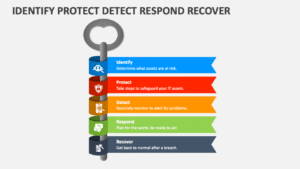
How Cyber Security Works
Cyber security isn’t one tool — it’s a combination of technologies, processes, and user awareness.
1. Prevention
Using firewalls, antivirus software, and security patches to stop attacks before they happen.
2. Detection
Monitoring systems through tools like Intrusion Detection Systems (IDS) that identify unusual behavior.
3. Response
If a breach occurs, security teams act fast — isolating affected areas and restoring systems.
4. Recovery
Data backups and disaster recovery plans bring systems back to normal with minimal damage.
What Is Cyber Security? How it works
Best Practices for Strong Cyber Security
-
Use strong passwords and enable two-factor authentication.
-
Update software regularly to patch vulnerabilities.
-
Avoid suspicious links or attachments.
-
Encrypt sensitive data before sharing.
-
Use a VPN when using public Wi-Fi.
-
Regularly back up your data.
Cyber Security in Business
Businesses are prime targets for cyber criminals because they handle large amounts of data.
Here’s how businesses benefit from a strong cyber security plan:
| Benefit | Explanation |
|---|---|
| Customer Trust | Secure systems build confidence and loyalty. |
| Compliance | Meets legal standards like GDPR or ISO 27001. |
| Financial Protection | Prevents costly data breaches and fines. |
| Operational Continuity | Ensures business runs smoothly without disruptions. |
What Is Cyber Security? How it works
Latest Trends in Cyber Security (2025 Edition)
-
AI-Powered Defense Systems – Artificial intelligence predicts and blocks cyber threats in real-time.
-
Zero-Trust Architecture – No one is trusted automatically, even inside a network.
-
Quantum Encryption – Next-gen data protection using quantum computing principles.
-
Cybersecurity Mesh – A flexible approach combining multiple security layers across devices.
-
Biometric Authentication – Using fingerprints, faces, or voice recognition for identity verification.
Diagram: Evolution of Cyber Security
2000s → Antivirus & Firewalls
2010s → Cloud Security & Encryption
2020s → AI & Zero-Trust Models
2025+ → Quantum & Biometric Security
This simple diagram illustrates how cyber security evolves with technology to stay one step ahead of hackers.
he Future of Cyber Security
As technology advances, so do the threats. The future will rely heavily on AI automation, quantum computing, and ethical hacking to secure systems. Education and awareness will also play a key role in reducing cybercrime globally.
What Is Cyber Security? How it works
Conclusion
Cyber security isn’t just a tech term — it’s a digital necessity. Whether you’re an individual protecting your smartphone or a company safeguarding sensitive information, cyber security ensures the safety of your digital life. As cyber threats grow more advanced, staying informed and proactive is your best defense.
FAQs
1. What is the main goal of cyber security?
To protect systems, networks, and data from digital threats and ensure privacy and integrity.
2. Who needs cyber security?
Everyone — individuals, businesses, and governments all rely on it for protection.
3. What are the 3 pillars of cyber security?
Confidentiality, Integrity, and Availability — known as the CIA Triad.
4. Is cyber security a good career in 2025?
Absolutely! With rising threats, skilled cyber security experts are in high demand worldwide.
5. How can I start learning cyber security?
Begin with online courses, ethical hacking tutorials, and certifications like CompTIA Security+ or CEH.
Please don’t forget to leave a review.











Trackbacks/Pingbacks